Stand cases — from 10 pieces, with tooling costs published
Most suppliers in this category quote a minimum of five hundred pieces per model. On mainstream phone models we can start at ten. That difference exists for one reason — the tooling already exists.
The three mechanisms
"Phone case with stand" covers three distinct products. They differ in thickness, in how they fail, and in what they are for.
| Mechanism | Thickness | How it works | How it typically fails | Best for |
|---|---|---|---|---|
| Flap / kickstand | 3.2 mm | A metal-hinged flap folds back into a recess in the back | The crease or hinge pin loosens first, usually at a specific fold angle rather than gradually | Viewing, video calls — the most familiar form factor |
| Ring / loop stand | 2.4 mm | A metal ring on a pivot, usable in both orientations | The pivot loosens and the ring droops, or the mounting point cracks through the shell | The thinnest result, and two-way use. Our default recommendation |
| Wallet fold | 3.5 mm | Multiple folio folds with card storage | Creasing along fold lines; magnet alignment drifts with use | Card-storage buyers. Thickest of the three, and not for a drop-protection pitch |
The hinge is metal on all three, sourced from several approved suppliers. Within a single model we standardise the hinge grade — we have found that mixing hinge grades across one production run creates more variation in the stand feel than it saves in cost.
Buyers sometimes ask whether they can name a hinge brand. We standardise instead, because mixing grades makes the stand feel inconsistent within one delivery. That is a better trade than the small saving — and it is worth knowing before you ask for it.
Where ten pieces per model comes from
We hold tooling for Apple iPhone 11 through 18 Pro Max, and for Samsung S-series and A-series across the current range. Because the tooling exists, there is no mould cost to recover, so the minimum is driven by production setup rather than by economics.
| Configuration | Minimum | Note |
|---|---|---|
| Single model, single colour | 10–20 pcs | Where the category's flexibility comes from |
| Same model, multiple colours | 100 pcs | Colour changes require a separate material batch |
| Model outside our tooling | Mould required | Cost and lead time below |
Ten pieces applies to models we already have tooling for. Outside that range you are back to mould cost and development time — which is the subject of the next section, because we publish those numbers rather than discovering them together.
Tooling costs and development time
These are the figures our production partners quote. We have found that buyers who plan around them make better decisions than buyers who find out later.
| Design | Tooling | Lead time to sample |
|---|---|---|
| Straight stand case (flip or ring) | ¥15,000 – 30,000 | 18–35 days standard, 12–21 expedited |
| Magnetic + multi-angle hinge | ¥20,000 – 50,000 | 18–35 days standard |
| Full metal / CNC integrated | ¥50,000 – 80,000 | Quote case by case |
The hinge itself accounts for roughly 10–15% of unit cost. The rest is the same case you would buy without the stand.
Almost no supplier publishes tooling costs. Most quote the sample price first and mention mould fees late in the negotiation.
It also gives you the figure behind our light customisation advice: launch on existing tooling to test the market, then tool the models that proved themselves. That ¥15,000–30,000 is what you do not have to spend yet.
Timing around new phone launches
New iPhone models are announced in September. Based on our production history, we typically have tooling prepared and ready to run in July and August — before the announcement rather than after it.
In practice this means: if you are planning a launch around a new model, talk to us before the announcement. We will tell you what our confidence level is at that point and what the realistic first-shipment date would be, rather than take an order against a spec we have not yet seen.
Thickness: what can actually be achieved
The ring stand at 2.4 mm is the thinnest of the three standard designs. Getting below 2 mm is possible, with one constraint worth knowing: the sub-2 mm designs are full PC constructions only.
That is a structural trade rather than a production shortcut. A full PC body can be moulded thin enough to carry a stand at under 2 mm; a TPU or hybrid body needs more material at the hinge mount to stay durable, so it will not go that thin with a working stand.
| What you are optimising | Configuration |
|---|---|
| Thinnest with a stand | Ring stand, full PC — 2.4 mm standard, under 2 mm achievable. Less drop absorption than a TPU bumper. |
| Best protection | Flip stand with a TPU bumper at 3.2 mm — the soft bumper absorbs impact and the flap folds into the recess. |
| Card storage | Wallet fold at 3.5 mm — thickest of the three, and the only one that adds a function the others do not. |
| Middle ground | Flip or ring on a PC/TPU hybrid, roughly 2.6–2.8 mm. |
Thickness does not track capability here. The thinnest design is also our default recommendation, and the design that adds the most function is the thickest. There is no version of this category that is thin and feature-rich at once, and the table above is the honest shape of that trade.
The hinge does not compromise corner protection in these designs. The corner geometry is unaffected by the stand assembly, which is why we can offer a thin stand case without telling you to give something up on impact performance.
Hinges and wireless charging
The hinge is positioned to avoid the charging coil rather than crossing it, which means charging works without the phone having to lie perfectly flat.
We can also combine a MagSafe magnetic ring with a stand. The ring is placed around the stand rather than through it, so you are not choosing between the two functions. This is available on the models in our existing tooling range — tell us which models and we will confirm which are covered.
Logo placement, and where we recommend it
One practical constraint specific to this category: we do not print on the flap.
Printing on a moving part, with a metal hinge behind it, creates alignment risk across the fold and can crack the print after a few hundred cycles.
Most of our customers place the logo on the case side instead, where it is visible in the hand, on shelf, and in photographs without being on a moving surface. Silkscreen, laser and deboss are all available on the side wall.
Product examples
A representative sample from our stand-case line. Reference images rather than a fixed catalogue — tell us the models you need and we will confirm which are in our existing tooling range.
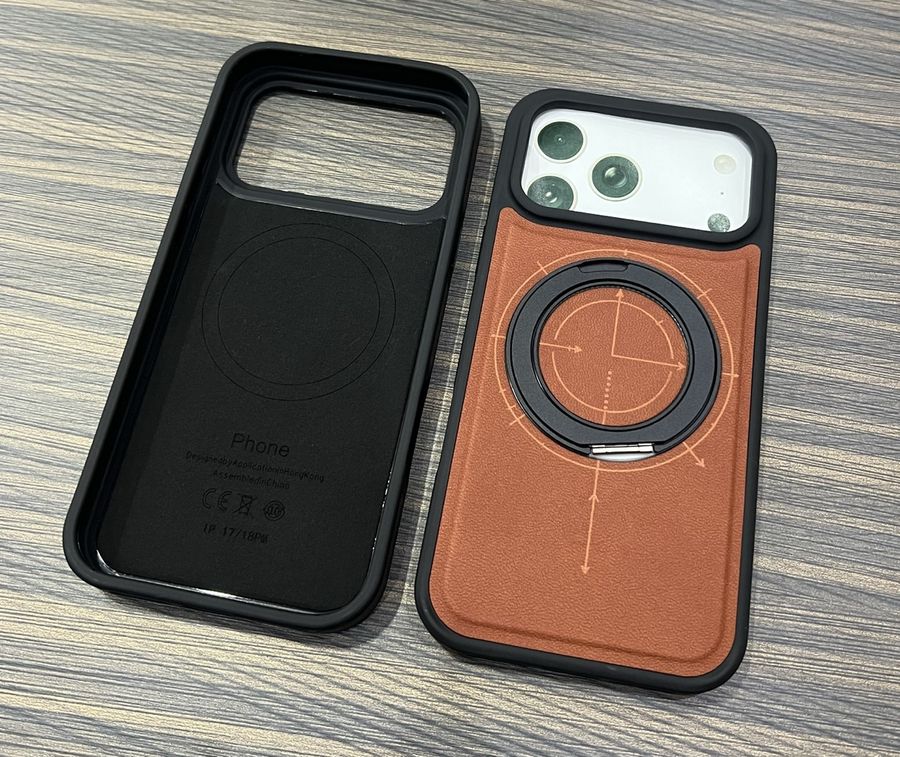
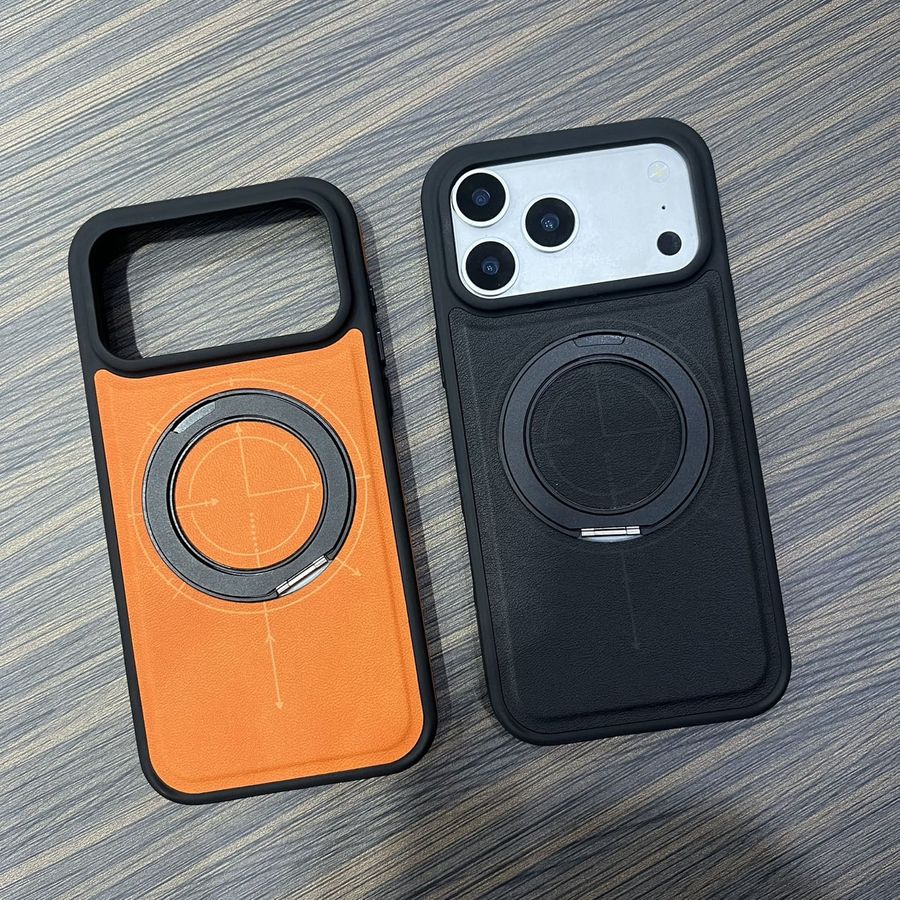
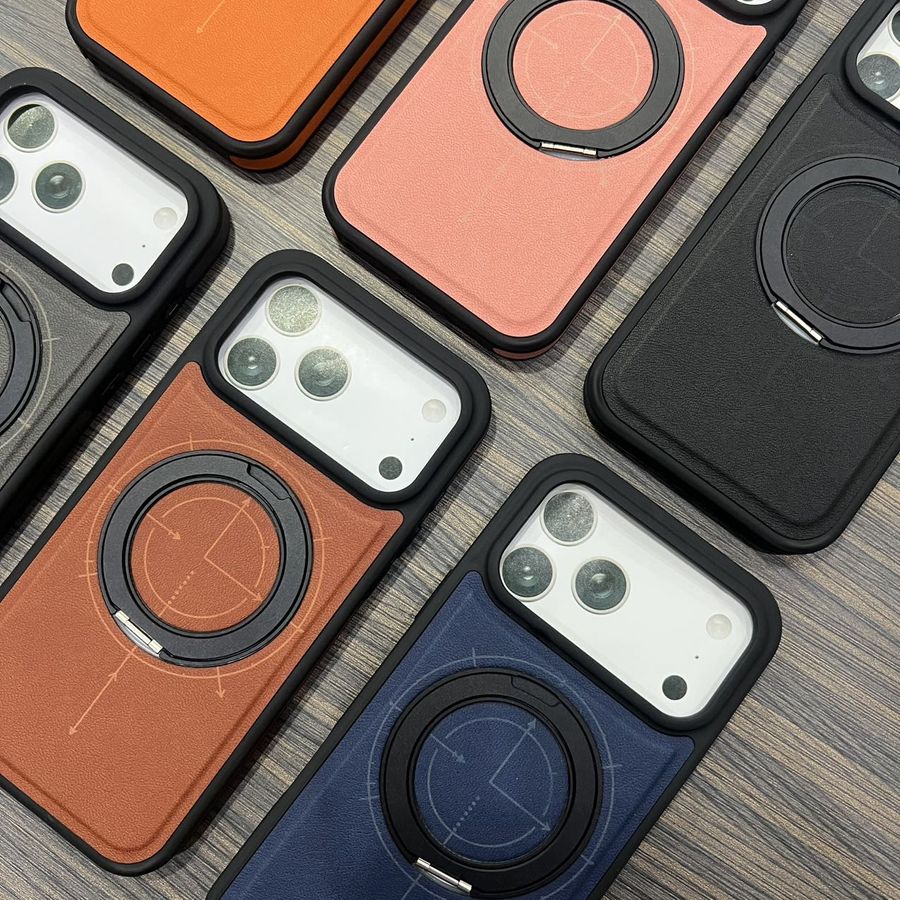
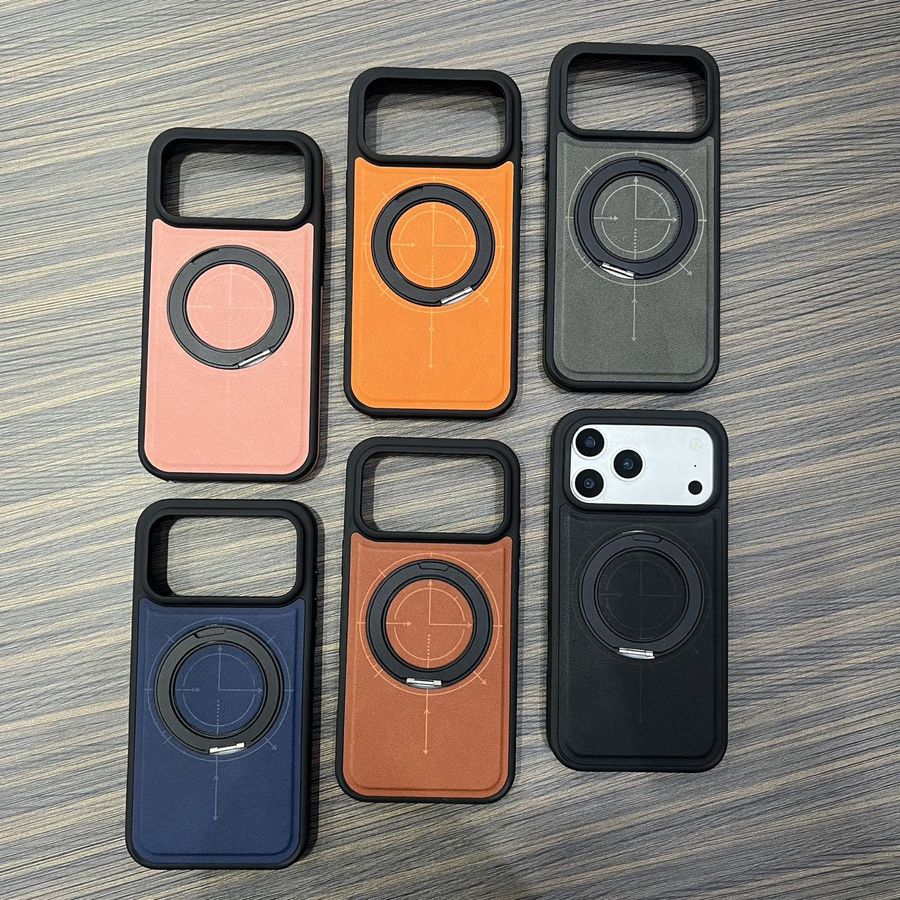
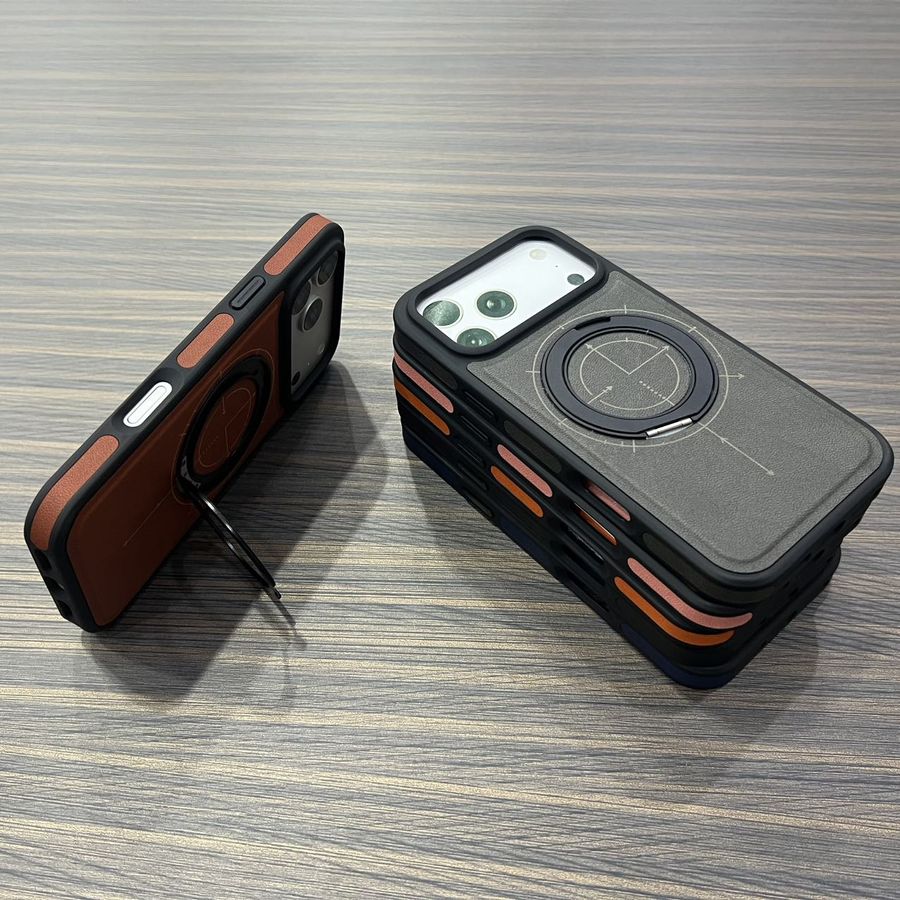
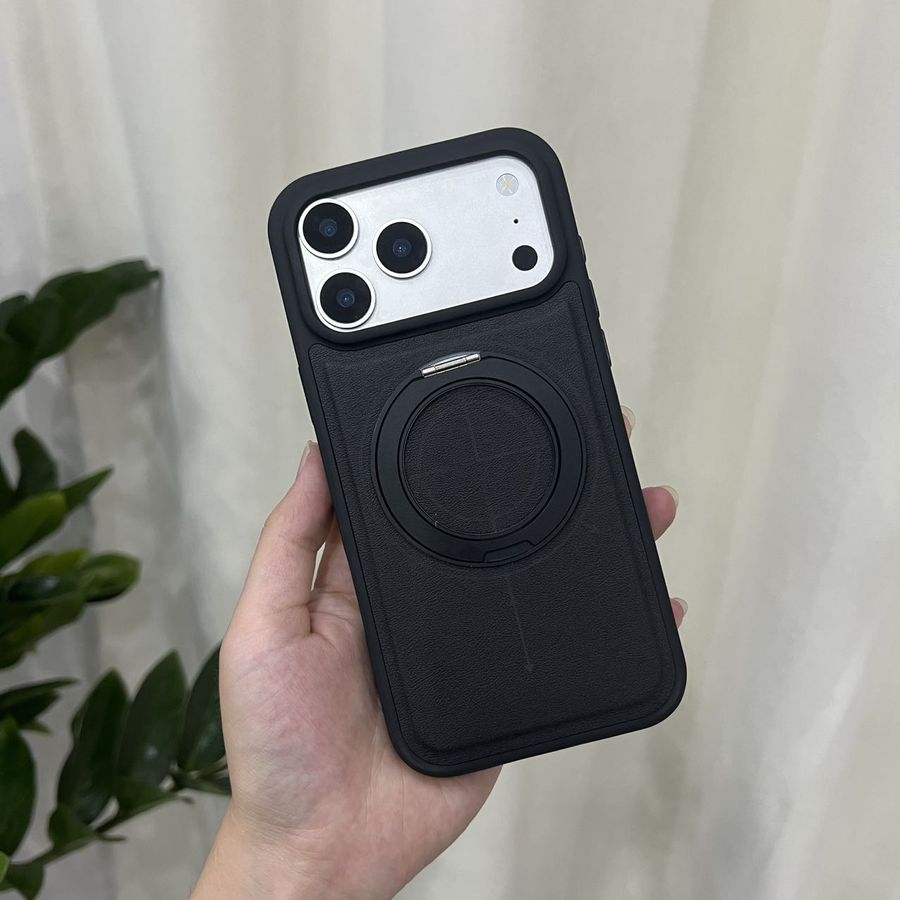
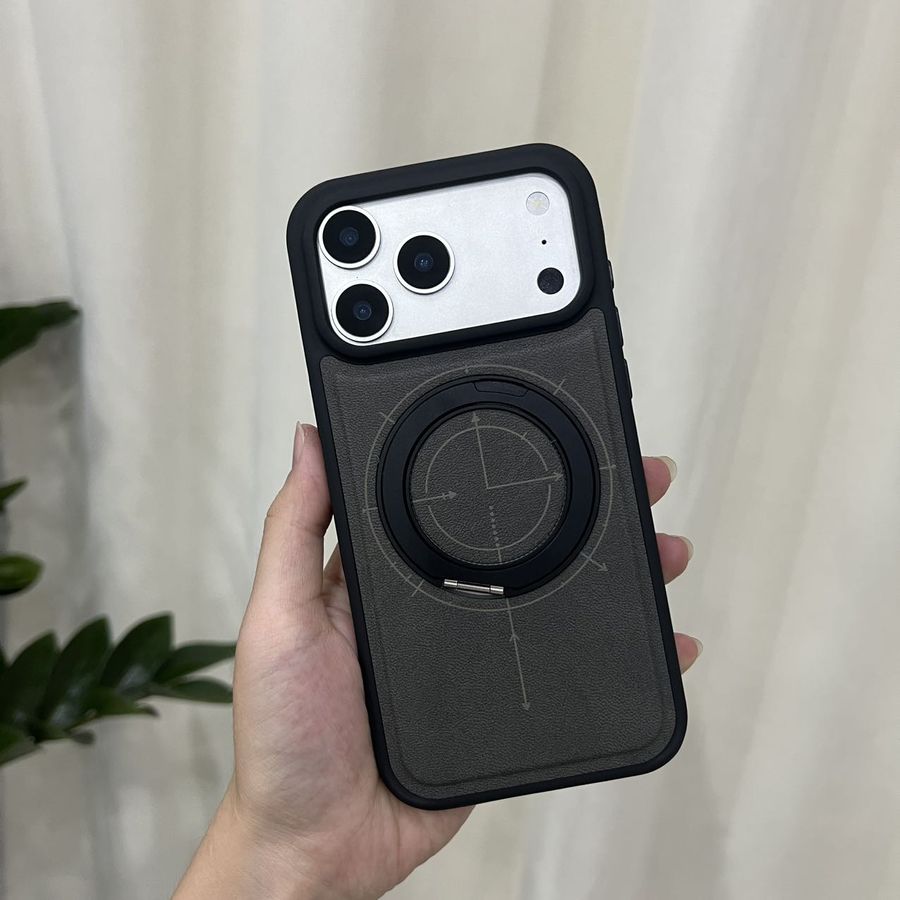
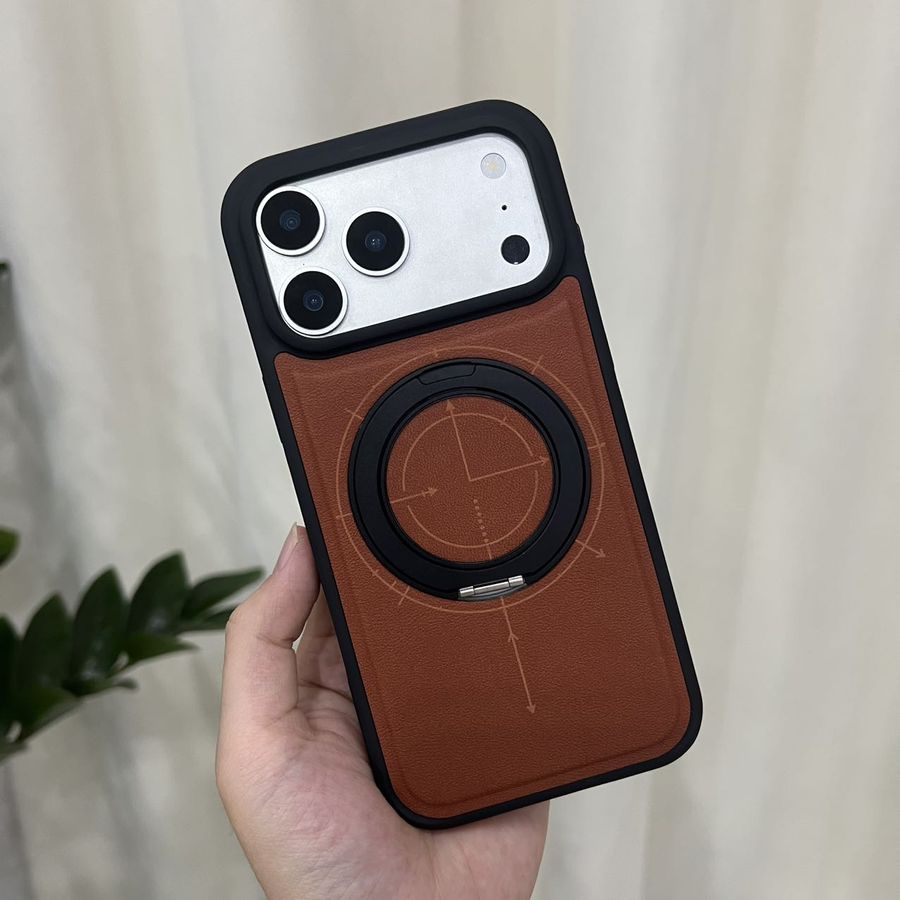
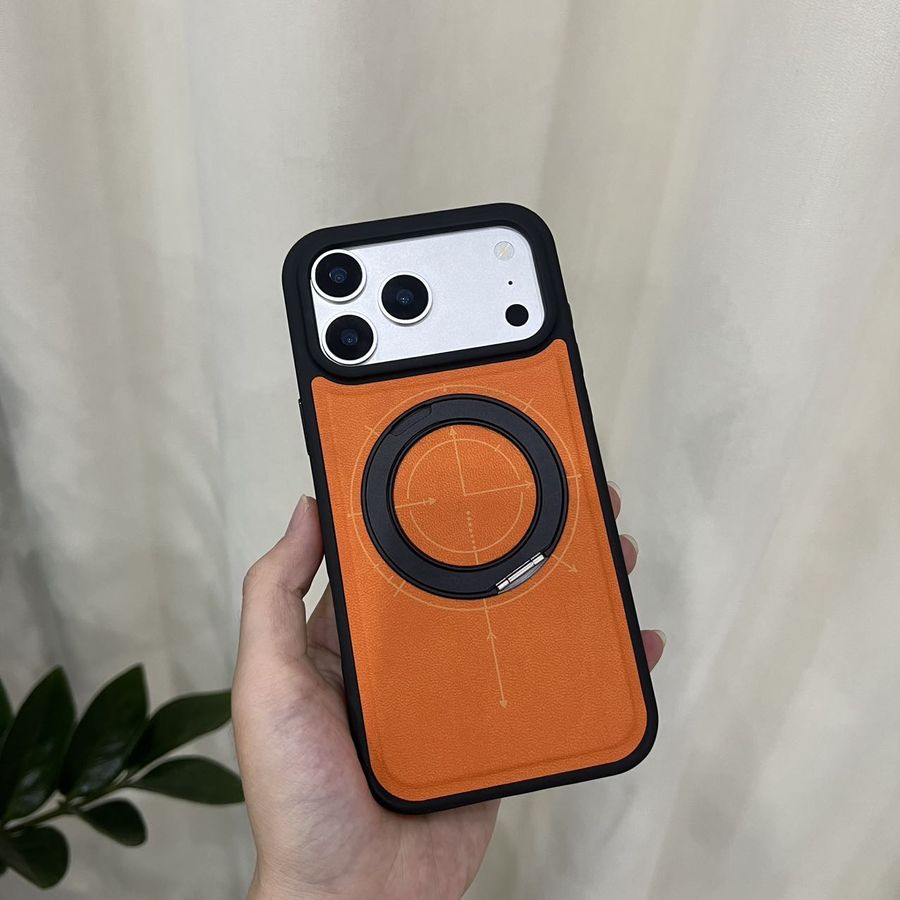
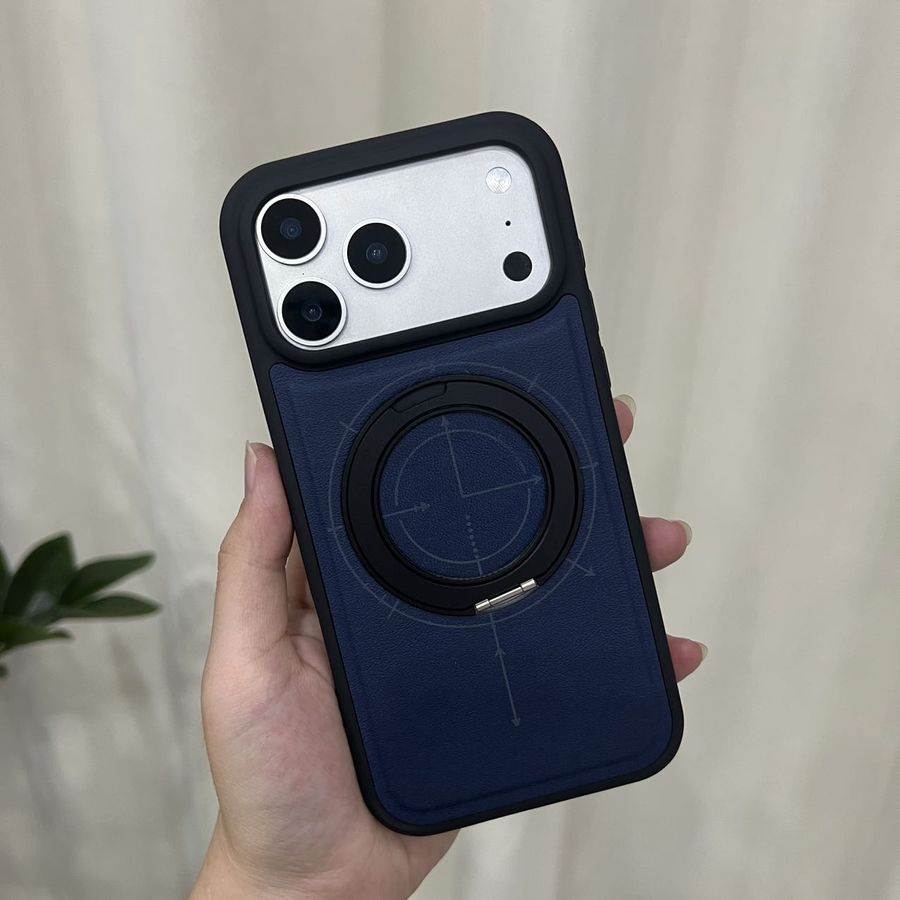
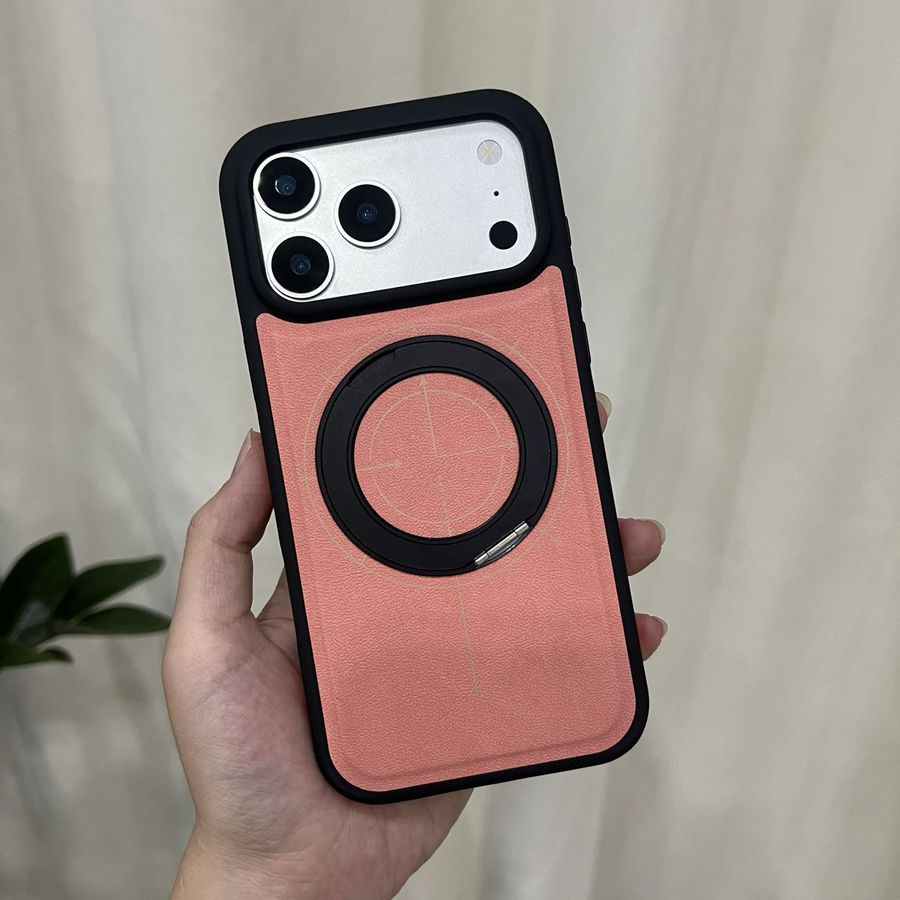
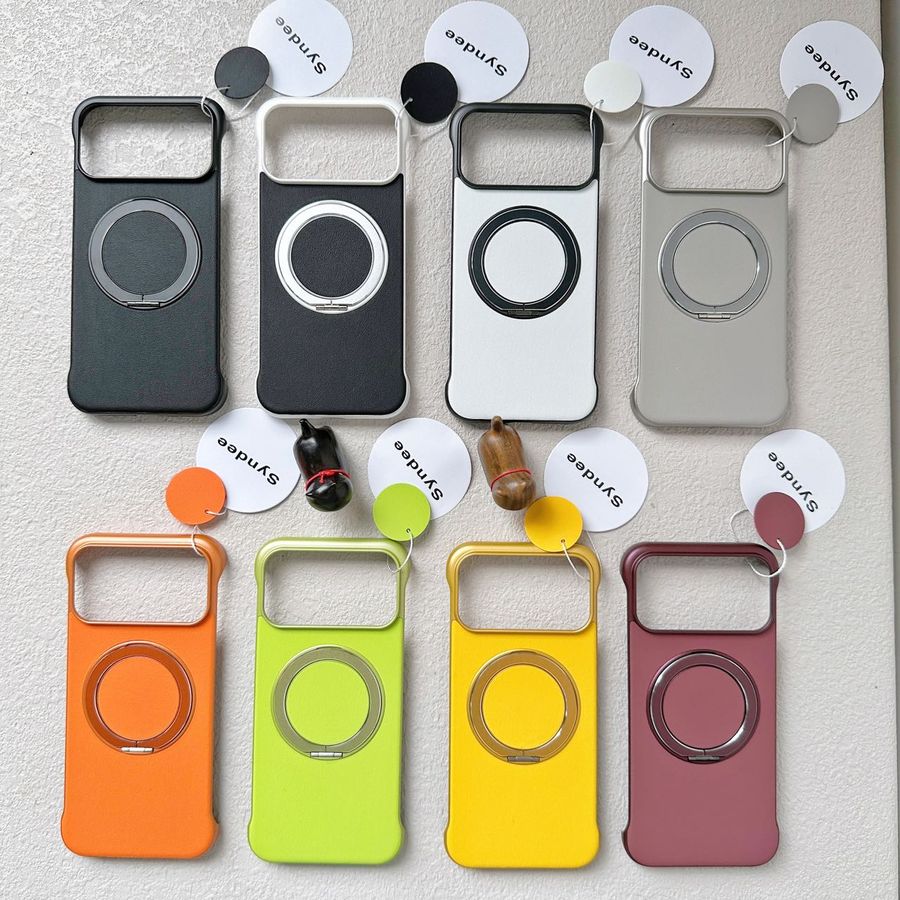
Hinge durability is not quoted as a cycle figure because we do not hold standardised open/close test data for this line. If cycle life is a deciding factor for you, tell us and we will arrange testing on your specific model before you commit. We hold a wider stand-case programme than shown here; tell us your model list and we will confirm which are in our existing tooling range.
Ordering
From 10 pieces per model on mainstream models in our existing tooling range, within a 1,000-piece total order. Because stand cases combine well within that range, mixed ordering works better here than the category norm — most suppliers in this space require 500–1000 pieces per model.
Questions
Because we already hold the tooling. We have moulds for Apple iPhone 11 through 18 Pro Max and for Samsung S-series and A-series across the current range, so there is no mould cost to recover and the minimum is driven by production setup rather than economics.
Outside that model range, a mould is required and the minimums return to normal.
- Straight stand case (flip or ring): ¥15,000 – 30,000, 18–35 days to sample, or 12–21 expedited
- Magnetic or multi-angle hinge: ¥20,000 – 50,000, 18–35 days
- Full metal or CNC integrated: ¥50,000 – 80,000, quoted case by case
We publish these because planning around them produces better decisions than discovering them late.
The ring stand is 2.4 mm as standard. Below 2 mm is possible, but only in a full PC construction — a TPU or hybrid body needs more material at the hinge mount to stay durable, so it will not go that thin with a working stand.
Yes. The hinge is positioned to avoid the charging coil rather than crossing it, so charging works without the phone lying perfectly flat.
A MagSafe magnetic ring can be combined with a stand, with the ring placed around the stand rather than through it.
No, we do not print on the flap. Printing on a moving part with a metal hinge behind it creates alignment risk across the fold and can crack after a few hundred cycles.
Most customers place the logo on the case side, where it is visible in the hand, on shelf and in photographs. Silkscreen, laser and deboss are all available on the side wall.
Send us your model list
We will tell you which models are in our existing tooling range, which need a new mould, what that costs, and what the realistic first shipment date would be.