PC hard cases — printing options, and why they crack
Hard polycarbonate feels substantial, photographs well and scratches slowly — and it has a failure mode that soft cases do not. Both are worth understanding before you order.
Why hard cases crack, and what reduces it
Polycarbonate is rigid. A rigid structure transfers a drop directly to a small contact area instead of spreading it, so it concentrates force at the point of impact. Soft TPU absorbs and spreads the same force.
That is the trade — and it is why most premium cases are hybrid rather than either/or.
Three things reduce cracking in practice:
- Corner cushioning — a thickened or protruding corner geometry that creates a controlled deformation zone instead of a brittle corner.
- Wall thickness — thicker walls absorb more before failure, at the cost of weight and bulk.
- TPU or silicone overmould — the hybrid approach: hard PC back for feel and photography, soft bumper for impact. It is the reason most flagship cases are not single-material.
Any supplier claiming a hard PC case will not crack is describing something that does not exist. Ask what the corner geometry is instead — that question gets you a real answer.
Printing: IMD, water transfer and UV
This is where PC differs most from every other material, and where buyers most often over-reach.
| Process | Look | Durability | Cost profile | Constraint |
|---|---|---|---|---|
| IMD | Full-colour, encapsulated, deep | Very high — the graphic is inside the material, not on it | Highest tooling and setup | Fixed per model. Not a custom-graphic route. |
| UV print | Full-colour, no limit on colours | High, with a slightly raised feel | Low setup at low volume | Best for your own artwork; not for large runs of one graphic |
| Water transfer | Wraps around edges and curves | Medium — the film can abrade at high-wear points | Medium | Coverage is excellent; feel is thin |
| Silk screen | Single colour per pass | High at moderate volume | Low for one colour, high for many | Colour count drives cost directly |
IMD is a manufacturing route for a fixed graphic, not a customisation method. Once a model is tooled for one IMD graphic, changing the graphic means a new mould.
A buyer who assumes IMD can print arbitrary artwork, pays for the mould, and then discovers the graphic cannot change has made the most expensive mistake available in this category. If you want your own artwork across many units, UV printing or silkscreen is the right route.
Clear PC and yellowing
Hard PC does not yellow the way TPU does. UV degradation is far slower. What degrades first is often the surface — scuff haze on glossy clear, or a matte finish that goes patchy after months of abrasion.
The practical implication: a clear PC case in year two looks dull, not yellow.
For sellers of slow-moving stock, an unsold clear PC case is worth more after two years than an unsold TPU one. If your inventory turns slowly, that difference is real money.
Product examples
A representative sample from our PC line. Reference images rather than a fixed catalogue — tell us the models and quantities you need and we will confirm what is available.
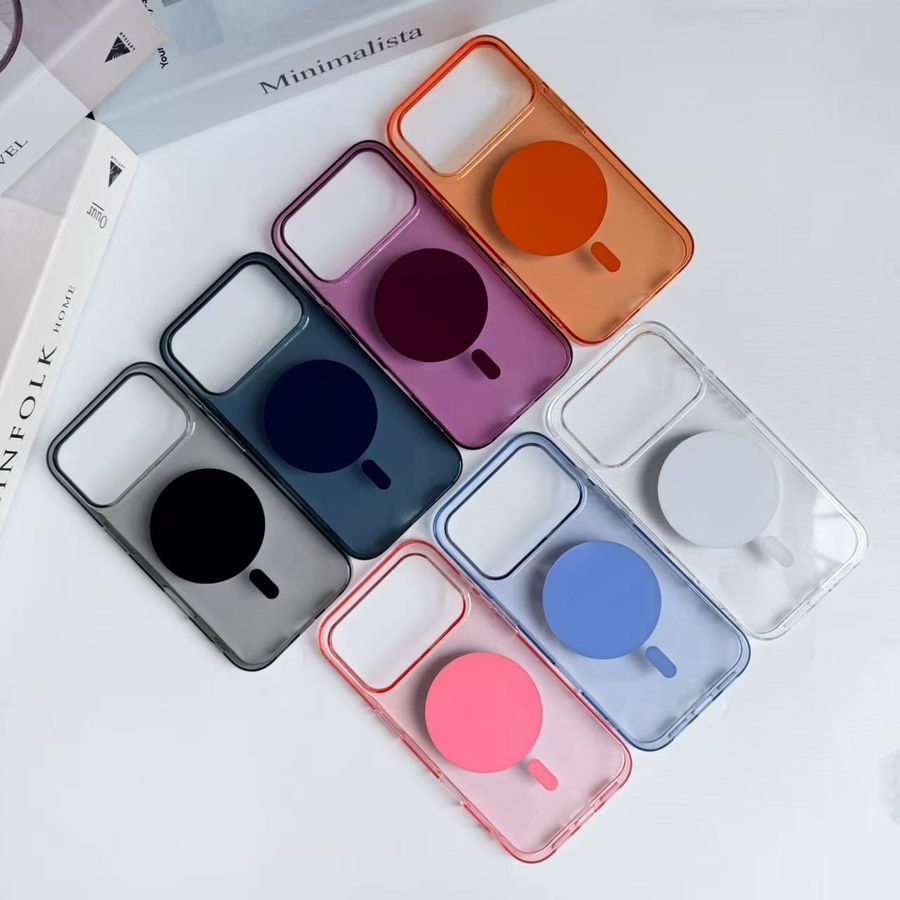
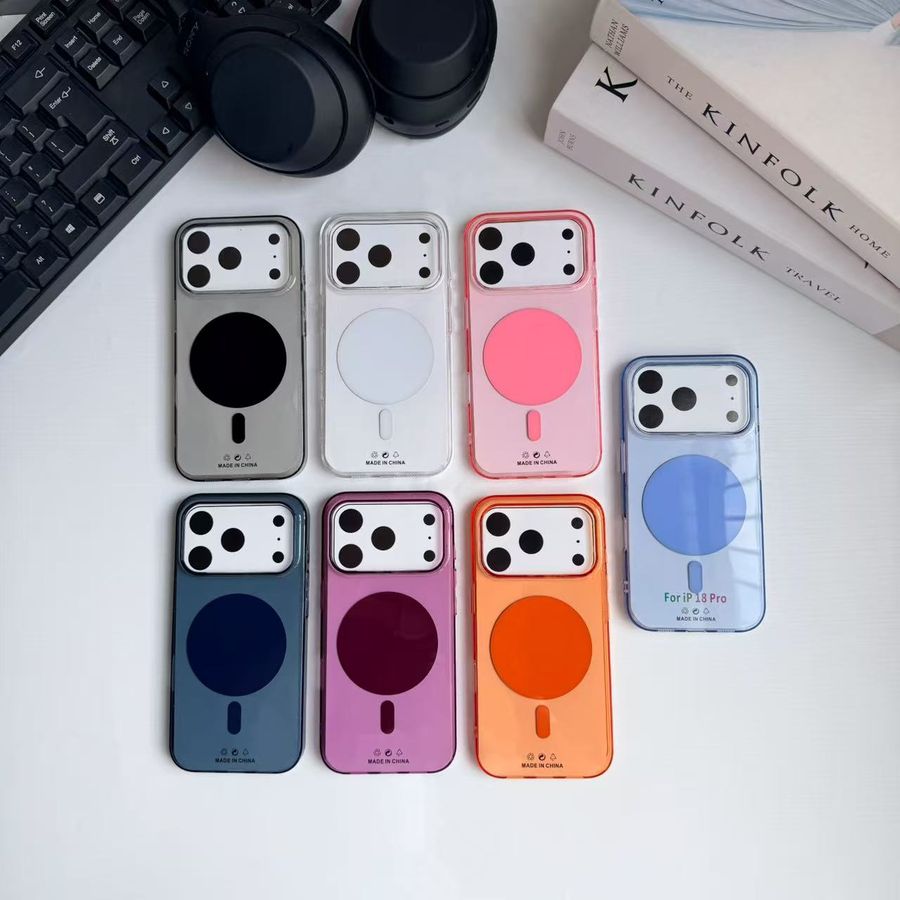
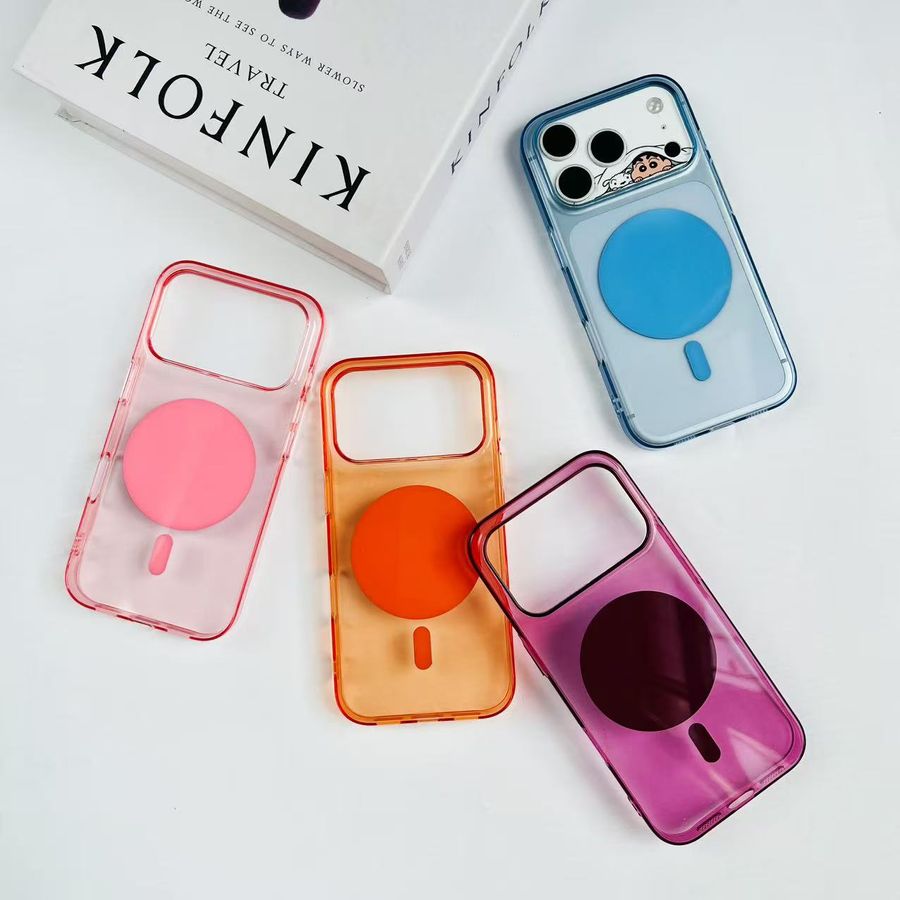
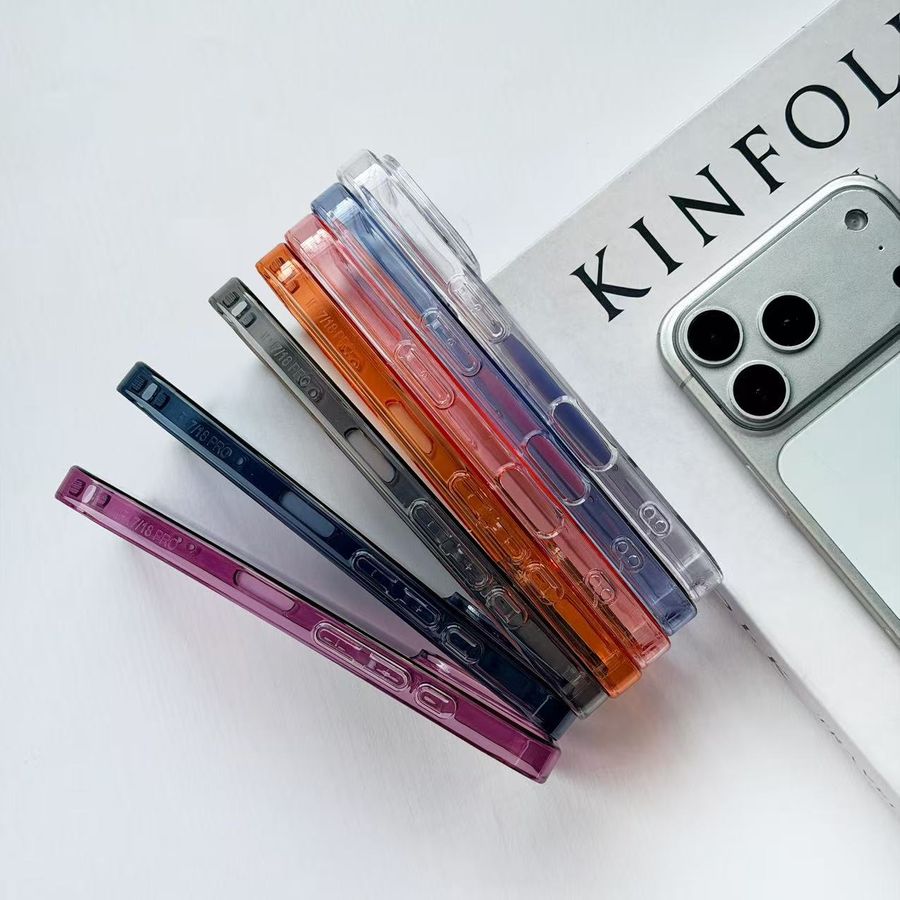
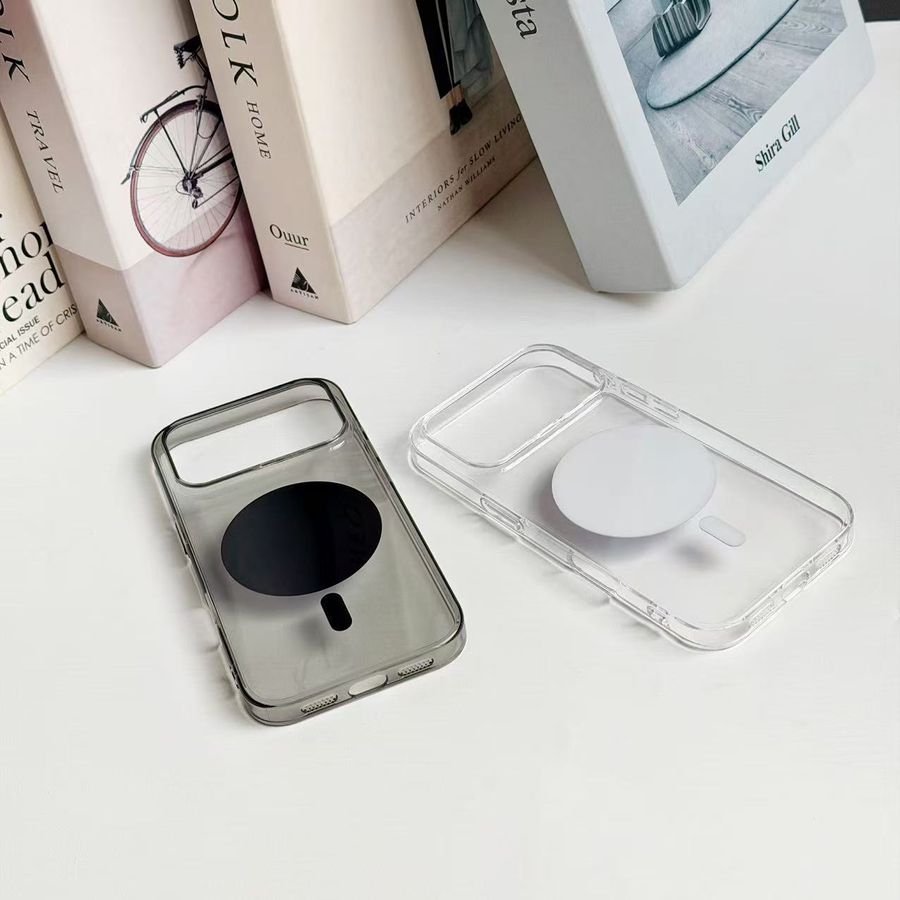
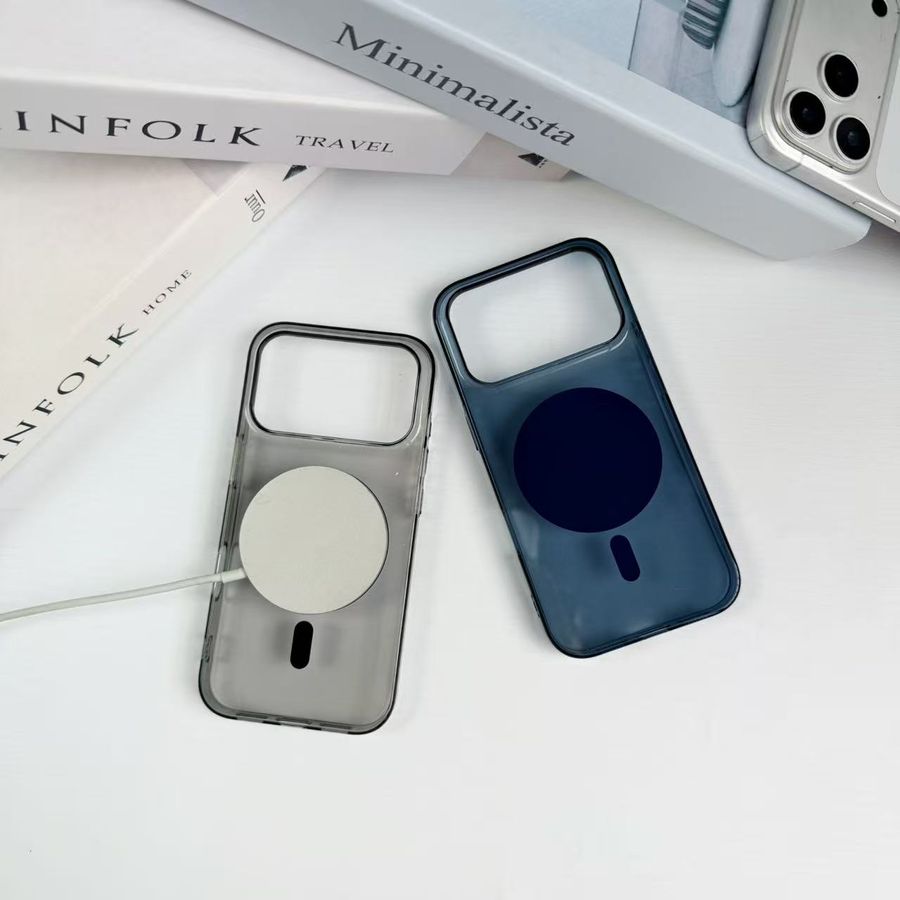
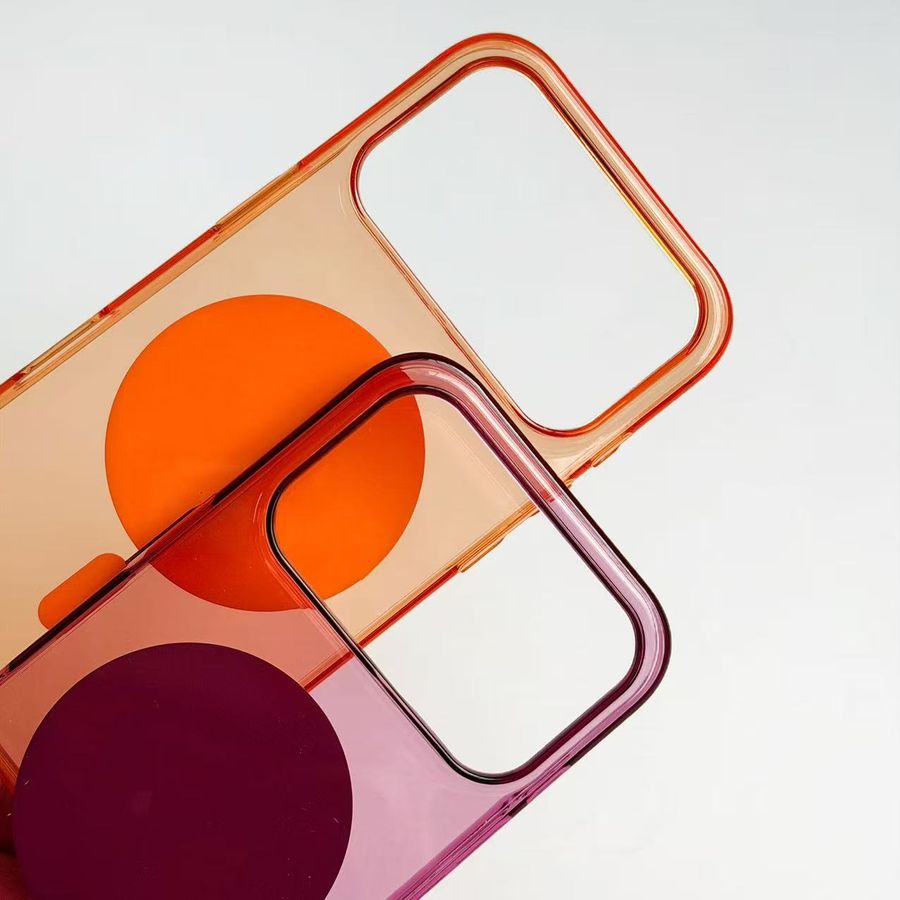
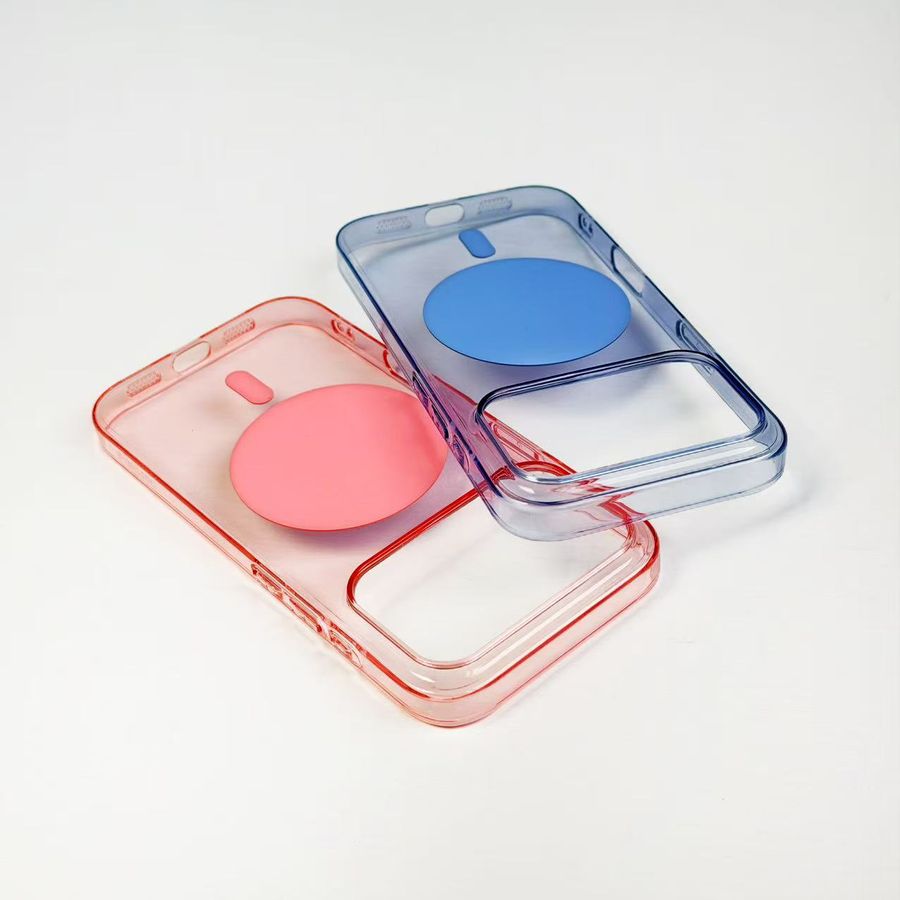
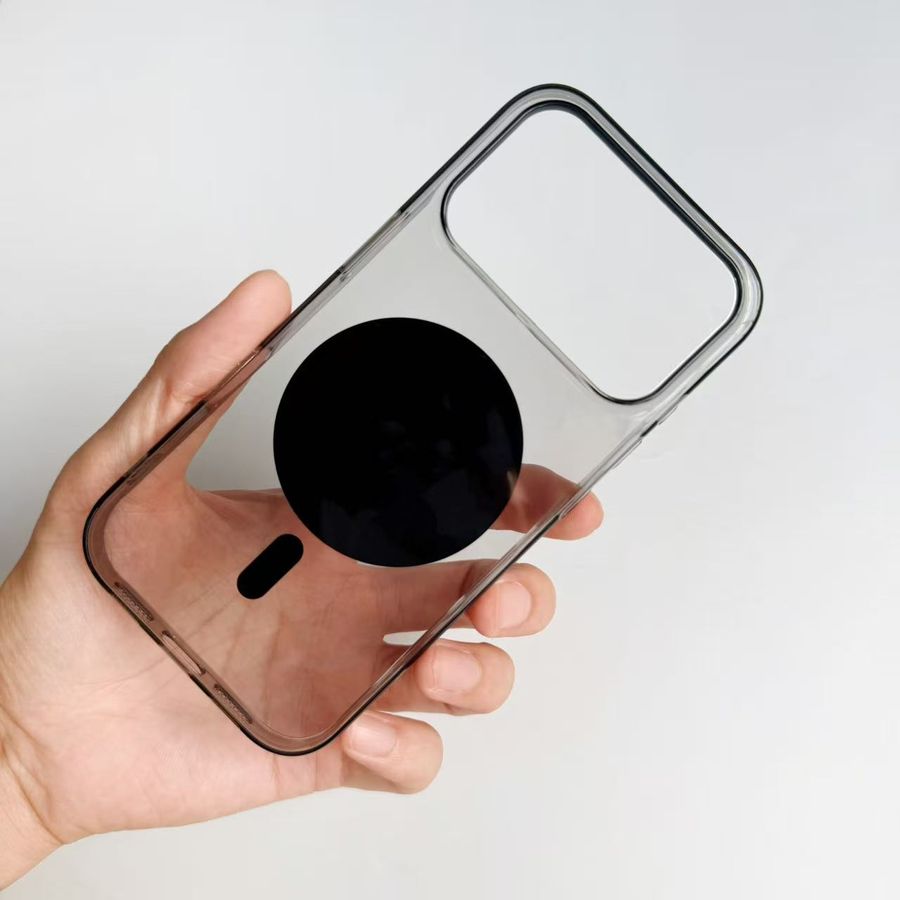
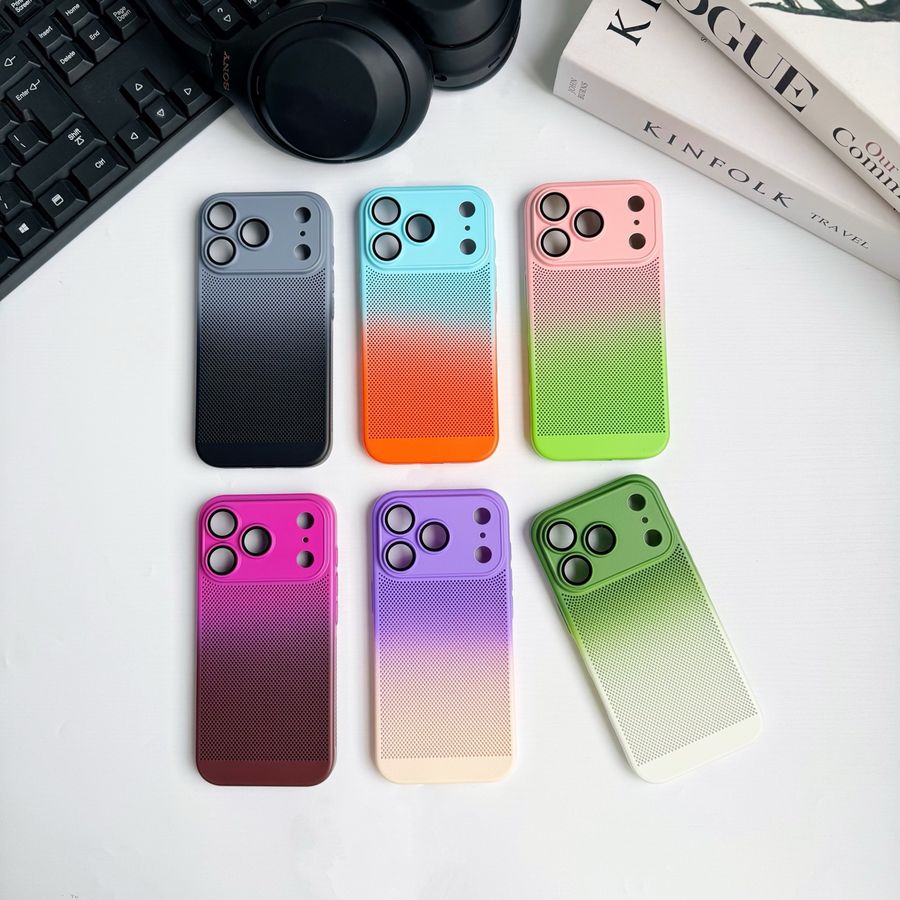
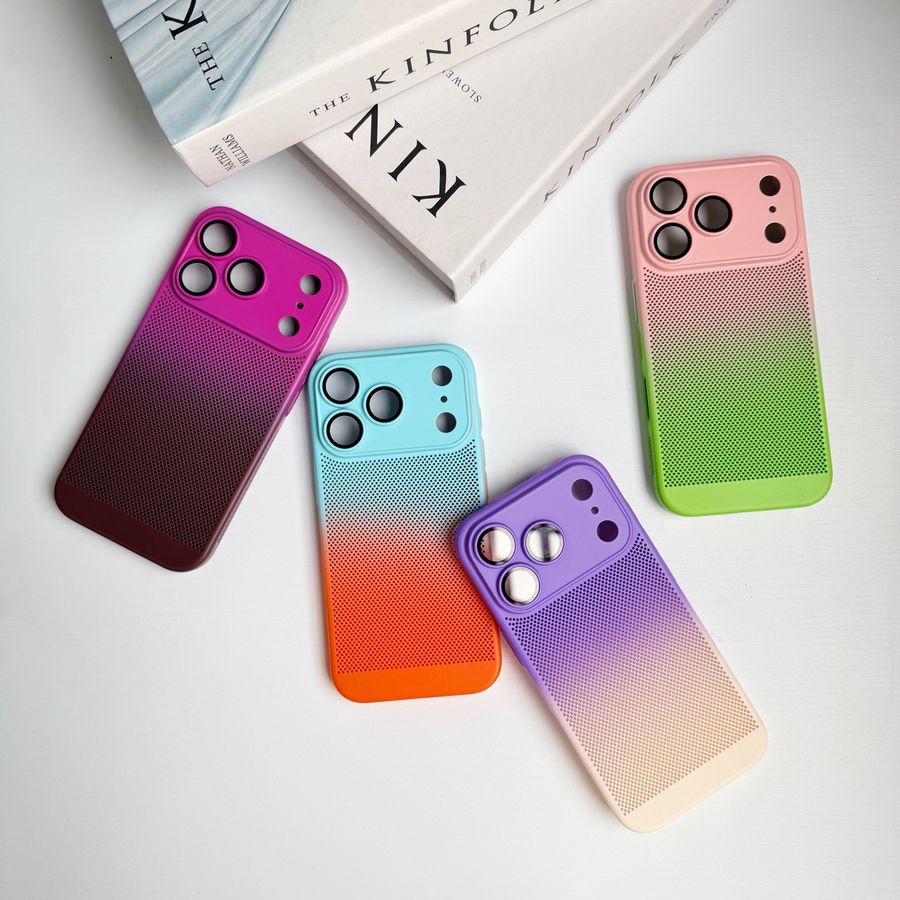
Graphics shown are illustrative of our process capability. Your own artwork is produced by UV print or silkscreen — see light customisation. We hold a wider PC programme than shown here; tell us your model list and we will send the matching set.
Production notes
Run by our PC partner plants across Guangdong. PC lines are where IMD tooling, silkscreen and water transfer all sit, which makes this the most flexible category for printed product.
Printing setup is a per-model cost, so mixed orders across printed PC models spread that cost efficiently.
Ordering
Mixed orders from 10 pieces per model on stocked designs, within a 1,000-piece total order. For printed models, tell us your artwork and quantity and we will confirm which process suits it.
Questions
Polycarbonate is rigid, so a drop concentrates force at a small contact area instead of spreading it. That is a material property, not a quality problem. It can be mitigated with corner cushioning, thicker walls, or a TPU or silicone overmould — which is why most premium cases are hybrids.
No supplier can credibly promise a hard PC case will not crack.
Yes, by UV printing or silkscreen.
IMD is different: it is a manufacturing route for one fixed graphic, not a customisation method. Once a model is tooled for an IMD graphic, changing the graphic means a new mould.
No, not to the same degree. UV degradation is far slower in polycarbonate. What degrades first is usually the surface — scuff haze on glossy clear, or patchy wear on matte.
A clear PC case in year two looks dull rather than yellow.
Mixed orders run from 10 pieces per model on stocked designs, within a 1,000-piece total order. For printed models, tell us your artwork and quantity and we will confirm which process suits it.
Send us your PC product list
Tell us whether the graphics are yours or from our catalogue. That single answer determines whether IMD, UV or silkscreen is the right process — and it is usually the most expensive mistake to get wrong.