Magnetic cases — ring position matters more than ring strength
Magnetic cases sell on a promise: your accessories will attach and your charger will work. That promise lives in one component most catalogues describe with a single number. This page explains why that number is not the thing to check.
Why position matters more than strength
Magnetic cases are quoted with a magnet strength figure. Buyers compare those figures, which is understandable and not very useful — because a ring with the right strength in the wrong position performs worse than a weaker ring correctly placed.
Position matters because that is what determines whether accessories seat correctly. A case that attracts a charger but where the charger sits slightly off-centre transfers power inefficiently, charges slower, and runs warmer.
Accessories that attach sort of frustrate buyers more than those that do not attach at all, because the failure is inconsistent. That inconsistency shows up as one-star reviews you cannot diagnose from the outside.
For assessment, three things matter. Ask which of these a supplier has:
- Ring alignment to the phone's own coil position
- How many magnets, and how they are distributed
- Whether the pattern is model-specific or generic
MagSafe and Qi2 are not the same thing
They get used interchangeably and they are different. MagSafe is Apple's accessory alignment system. Qi2 is the Wireless Power Consortium's standard for magnetic wireless charging, built on the same geometric alignment principle but with a different certification and testing regime.
For a case, what matters practically: the magnet geometry should follow the Qi2 specification if the case is to work reliably with the wider ecosystem of certified chargers and accessories, rather than only with one brand's ecosystem. Products built to the MagSafe geometry alone will generally work with Qi2 chargers, but products claiming Qi2 compatibility should be built to the standard rather than aligned to it by approximation.
"MagSafe compatible" and "Qi2 certified" are different claims and should not be used interchangeably in listing copy. Using them loosely is the kind of thing that turns into a consumer complaint.
Where magnetic cases can go wrong
Metal cases cannot take a magnetic ring
A non-ferrous metal body will shield magnets and interfere with wireless charging. If you want a metal look, the answer is a metal-look finish on PC or TPU, not a metal body.
Thickness costs alignment
Every additional millimetre between the ring and the phone's coil reduces charging efficiency. Ring position on a thick case has to be set slightly differently than on a thin one.
Card and wallet inserts conflict
A card slot sitting between the ring and the coil interferes with charging. Magnetic wallets exist for this reason, but ordinary card slots do not work.
Cross-model tooling is the problem
A magnetic ring is positioned for one specific model. This is the main reason magnetic cases are less flexible for multi-model orders than other categories.
Magnetic models are model-specific in a way plain cases are not, which affects both tooling and how easily you can run a mixed order across a wide model range. Plan for fewer models per order in this category than elsewhere.
Materials available
MagSafe-compatible versions exist across our main lines: PC for a slim hard feel, TPU for a soft bumper with a rigid back, PU leather for a premium look, and heat-dissipation structures with the ring positioned around the vent.
The alignment requirement is the same in all of them, and it is applied per model.
Customisation on top of a magnetic base →
Product examples
A representative sample from our magnetic line. Reference images rather than a fixed catalogue — tell us the models you need and we will confirm ring position for each.
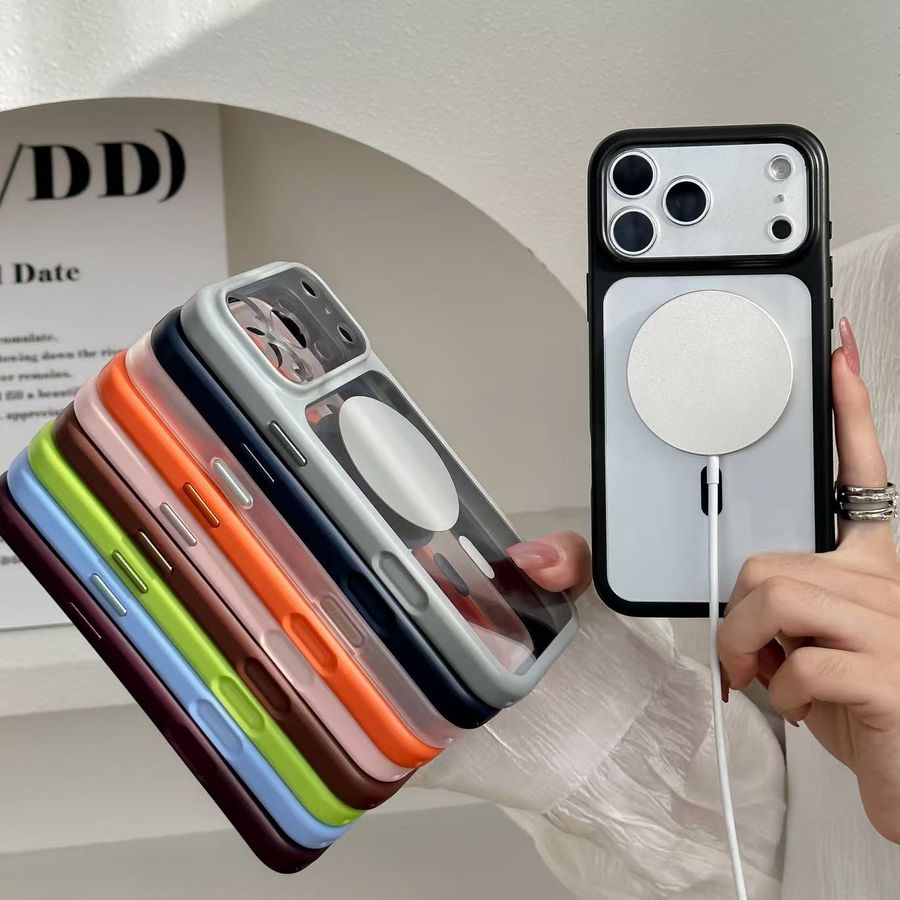
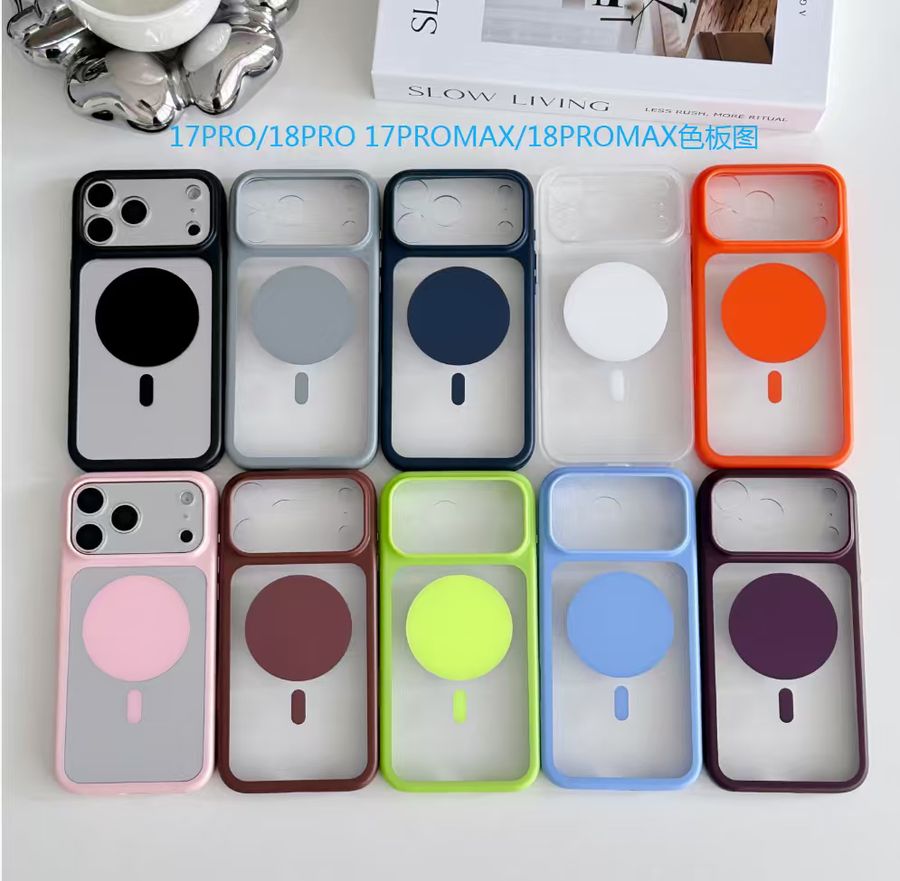
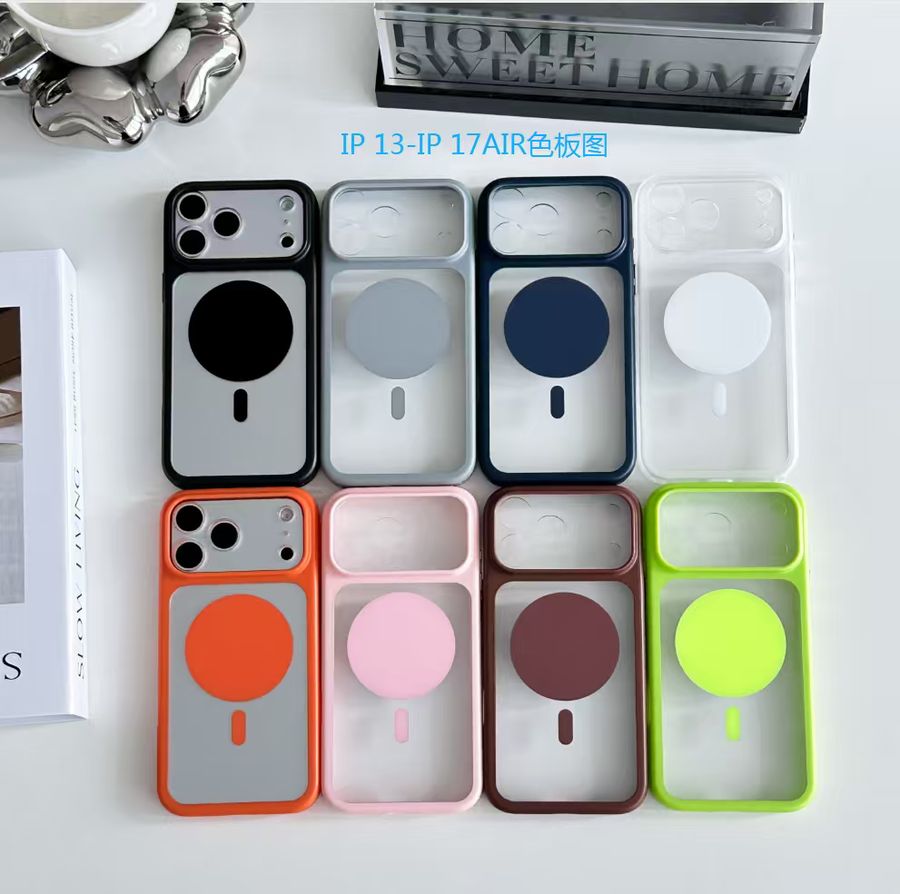
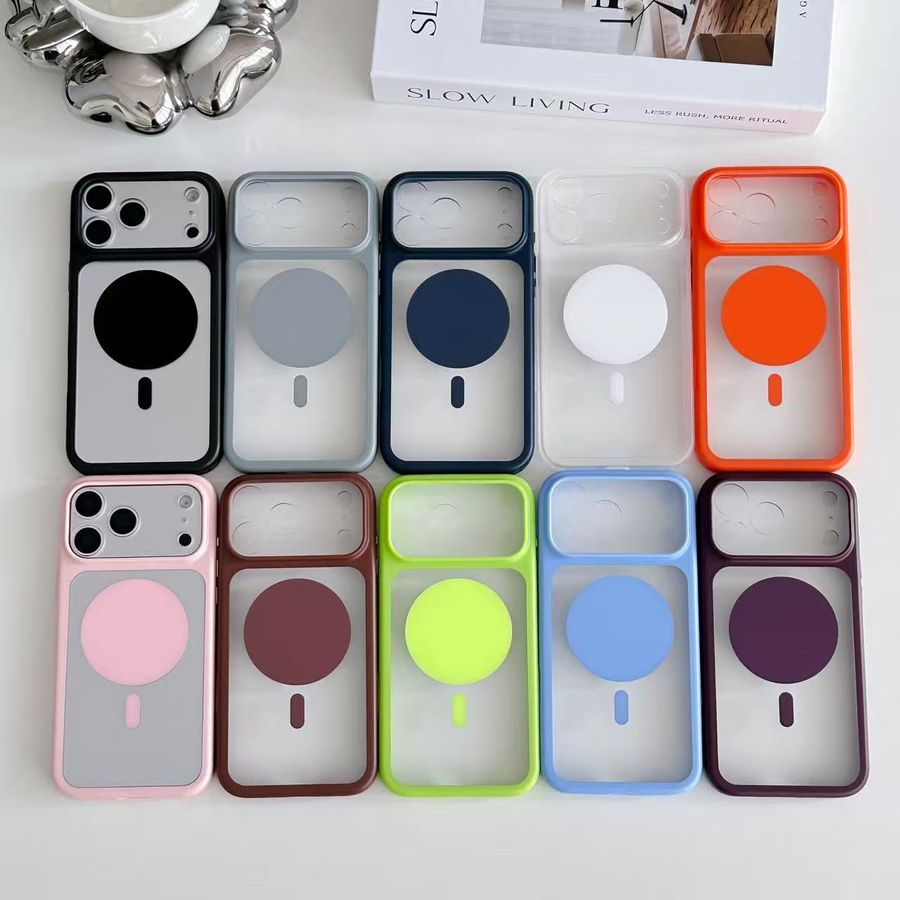
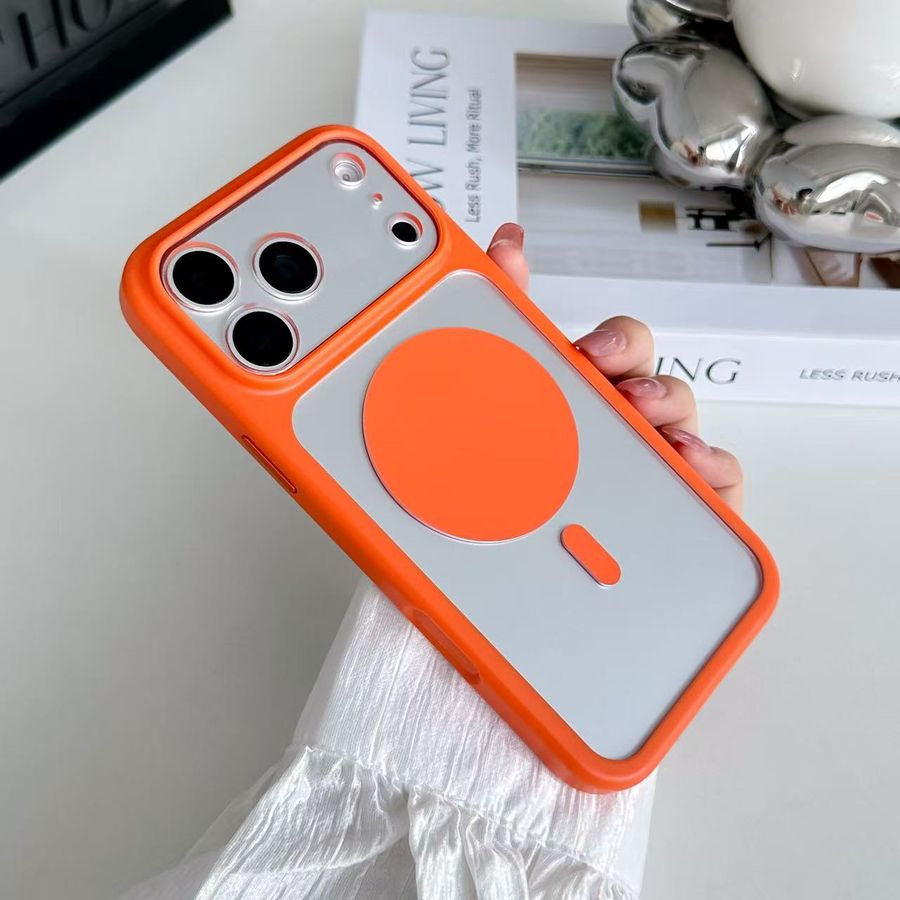
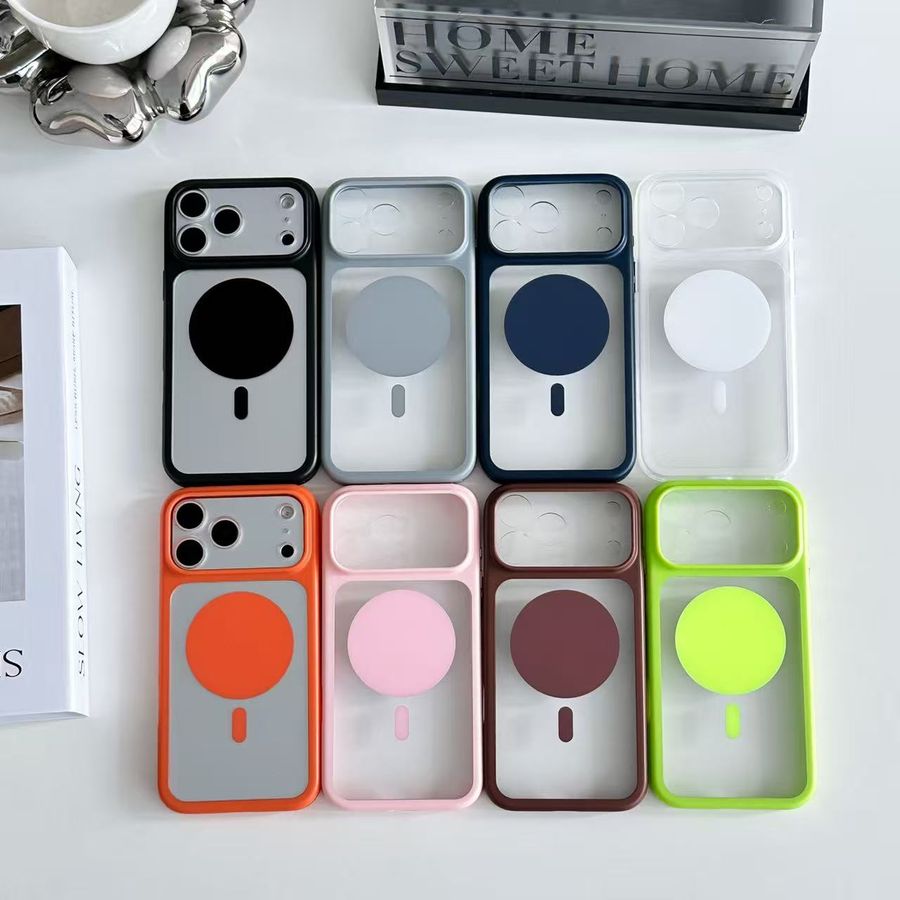
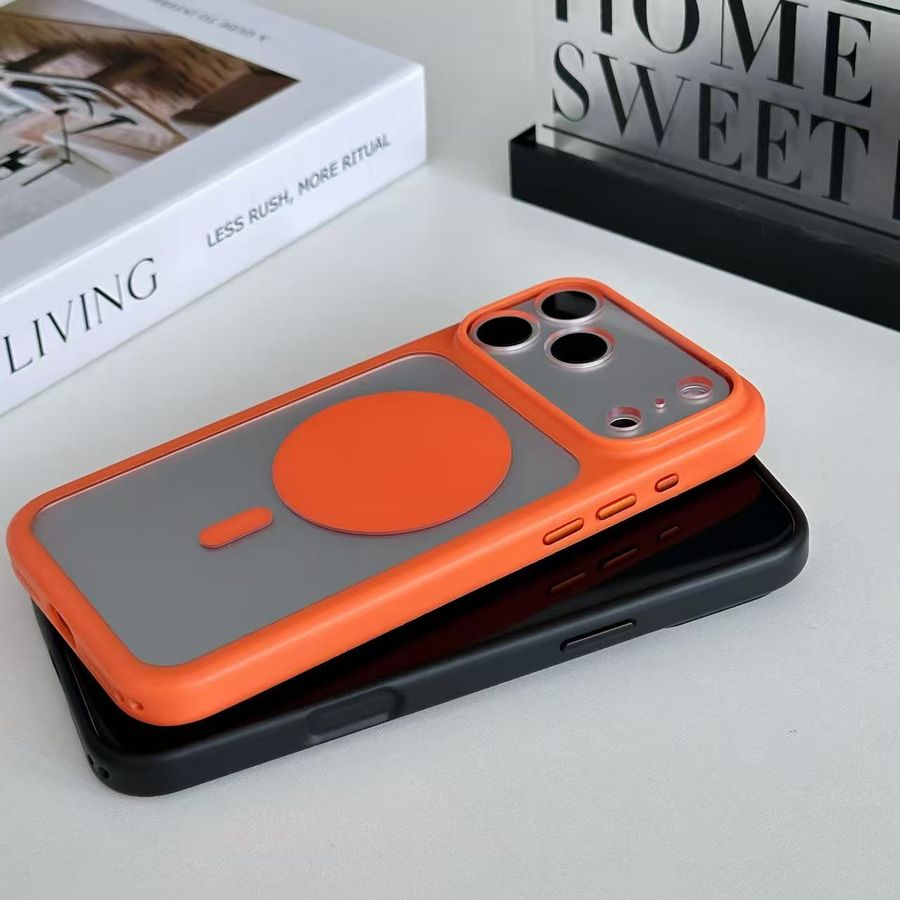
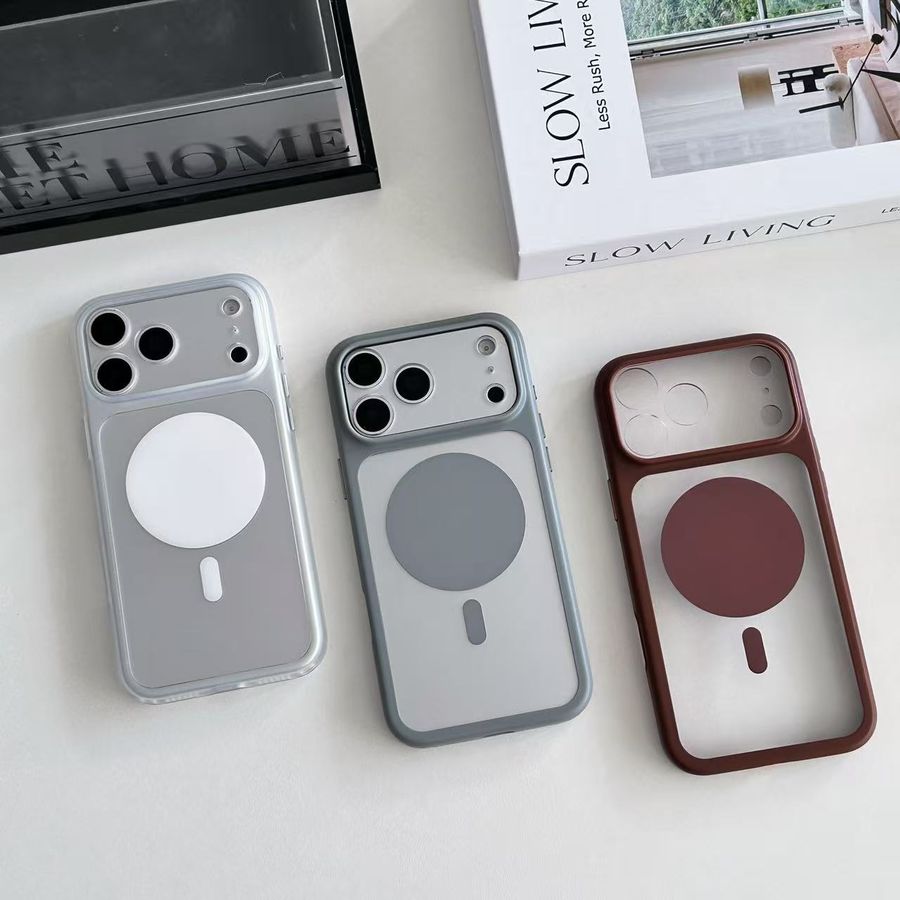
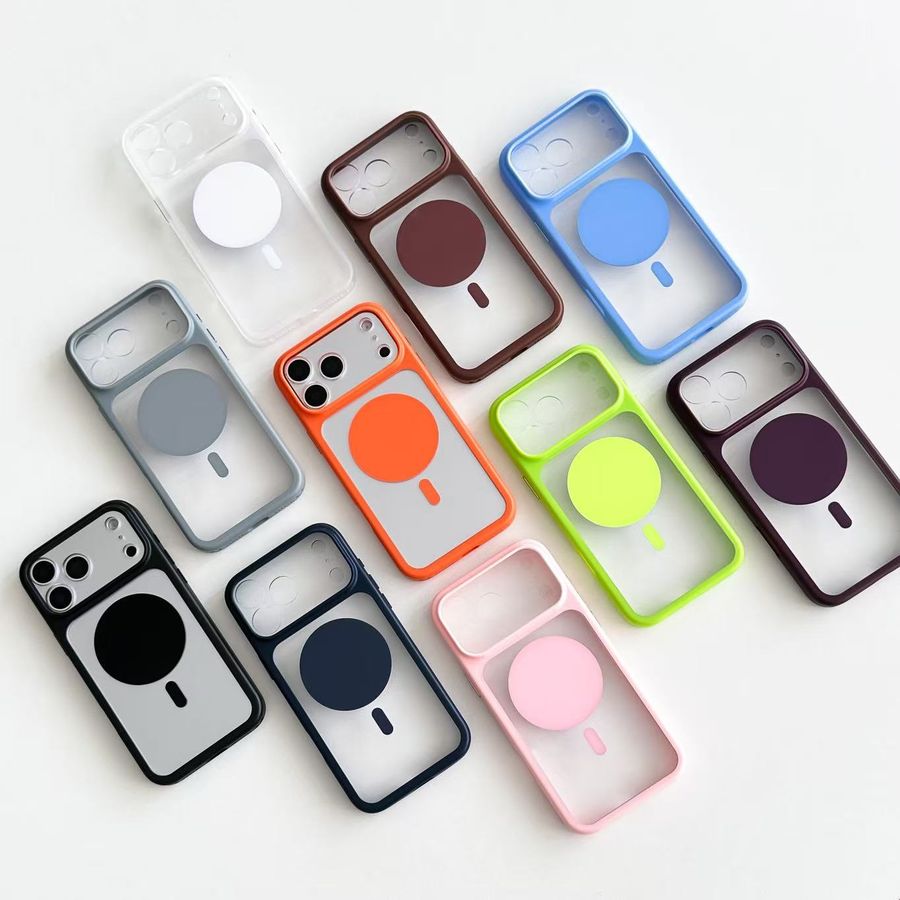
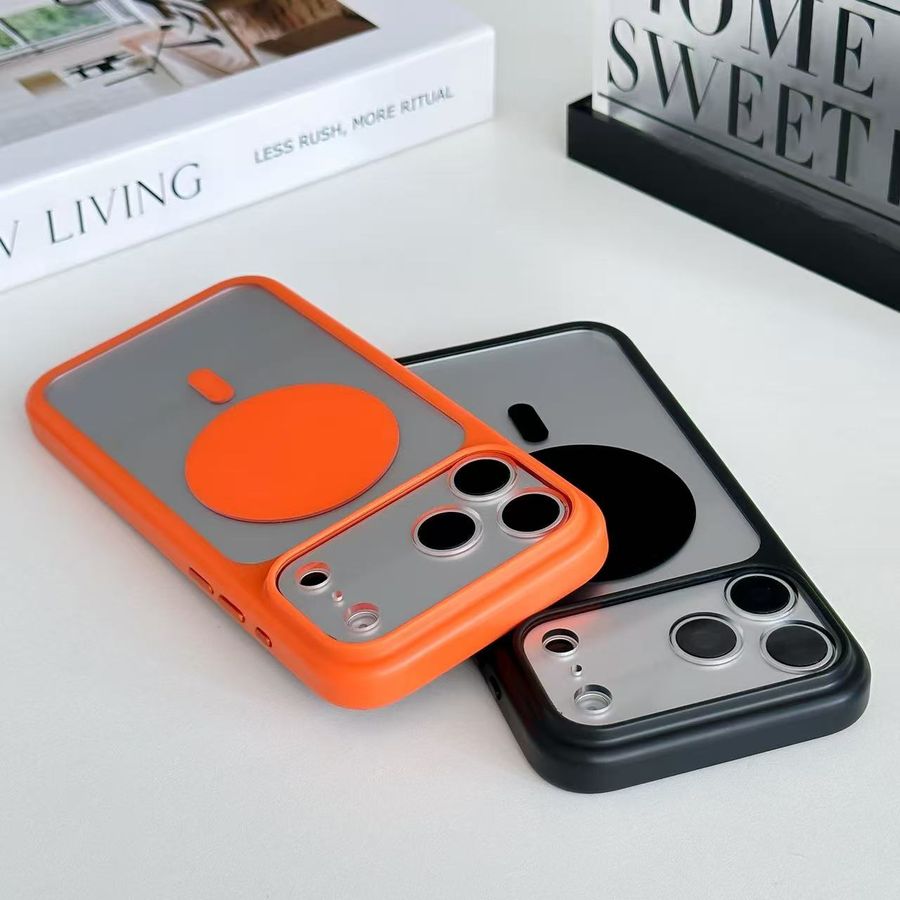
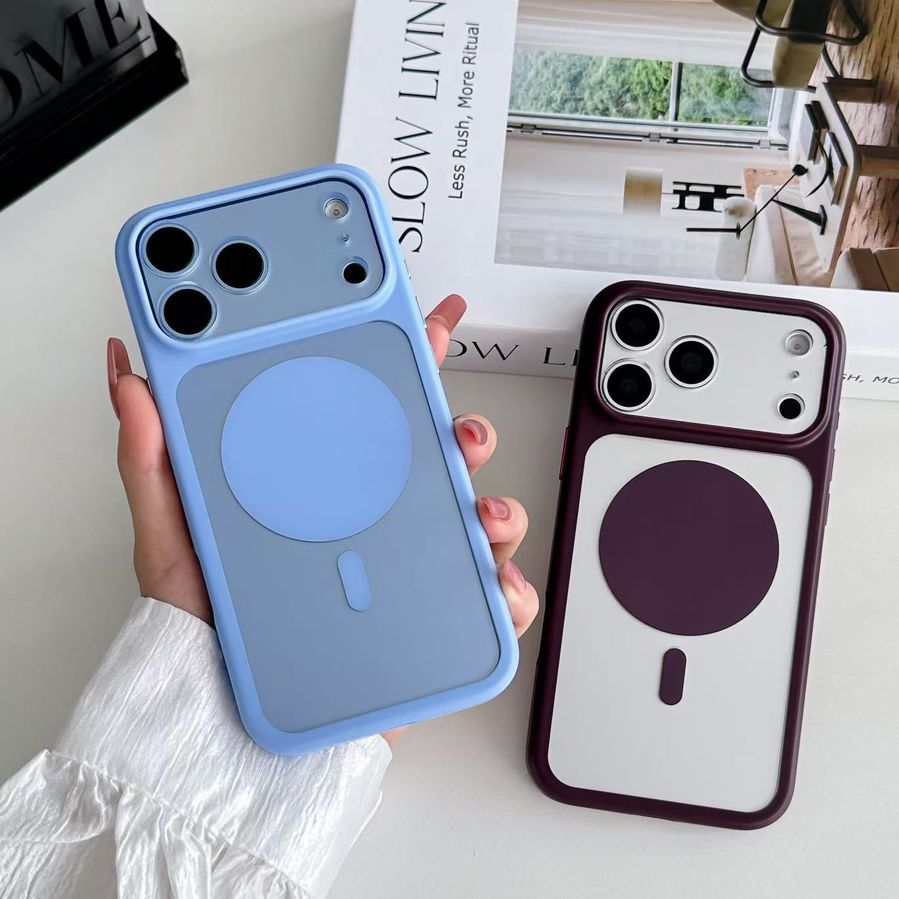
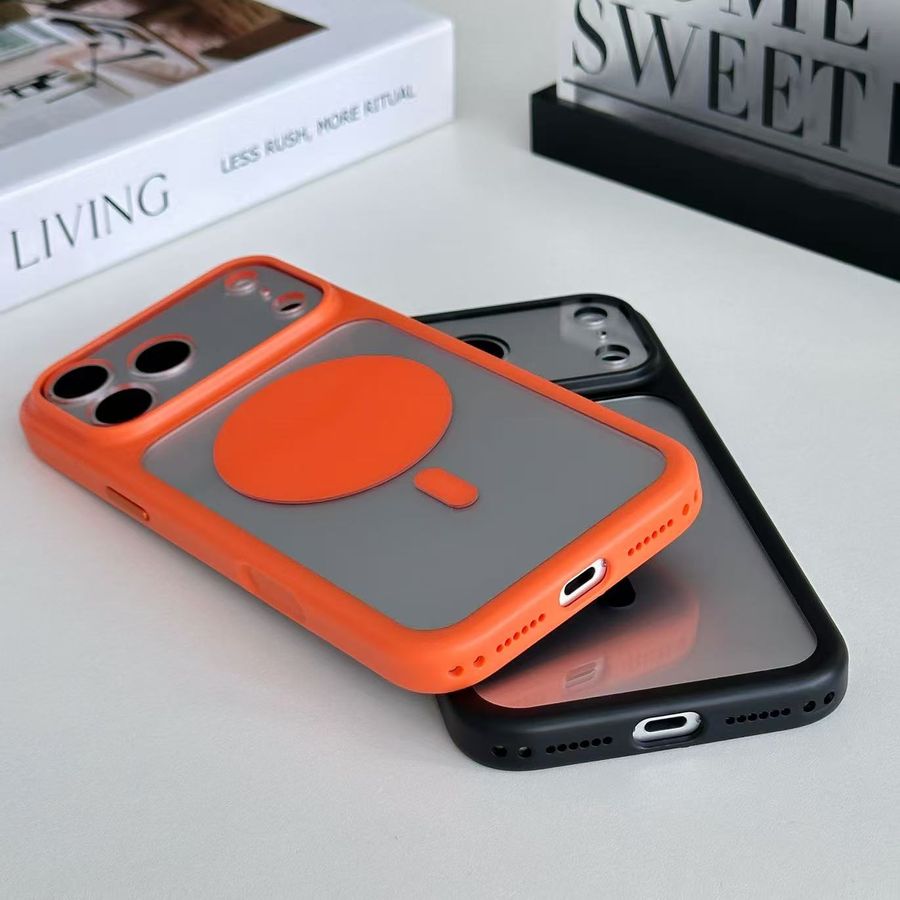
We hold a substantially larger magnetic programme than the sample above — more colourways, more models and more ring positions than are shown here. The images on this page are illustrative of construction, not a catalogue. Tell us the models and finishes you need and we will send the matching set.
Ring position is set per model. Ask us for the alignment detail on the specific models you intend to buy — see how this is checked.
Production notes
Assembled and printed at our magnetic partner plants across Guangdong. Ring alignment is checked at pre-production sample stage and again before shipment.
See which plant runs magnetic →
Ordering
Mixed orders from 10 pieces per model on stocked designs, within a 1,000-piece total order. Because magnetic cases are model-specific, tell us which models you need and we will confirm which can be run together and at what quantity.
Questions
No. A ring with the right strength in the wrong position performs worse than a weaker ring correctly placed. Ring alignment to the phone's own coil position is what determines whether accessories seat correctly and whether charging transfers power efficiently.
No. MagSafe is Apple's accessory alignment system; Qi2 is the Wireless Power Consortium's standard for magnetic wireless charging, built on the same geometric principle but with a different certification and testing regime.
Products built to MagSafe geometry generally work with Qi2 chargers, but products claiming Qi2 compatibility should be built to the standard rather than aligned to it by approximation.
No. A metal body will shield the magnets and interfere with wireless charging. If you want a metal look, the answer is a metal-look finish on PC or TPU, not a metal body.
Mixed orders run from 10 pieces per model on stocked designs, within a 1,000-piece total order. Because magnetic cases are model-specific, tell us which models you need and we will confirm which can be run together and at what quantity.
Ask us about ring alignment
Send your model list. We will tell you which plants run them, whether the tooling is model-specific, and where the ring sits relative to each phone's charging coil.